When Your Purchasing Team Can't Keep Up With Growth
Growth can expose cracks in procurement. Here's what happens when purchasing teams hit capacity.
.png)
Construction firms face an uncomfortable paradox: the processes that built the business eventually constrain it. Project abandonment activity increased 88.2% year-over-year, driven partly by procurement delays and cost escalation that overwhelm contractors' operational capacity.
The purchasing team that handled everything smoothly at $10 million in revenue becomes a bottleneck at $25 million. Not because they're doing anything wrong, but because the volume has outpaced the lack of systems and infrastructure. The contractors who recognize this pattern early can address it systematically; those who don't discover it through crisis.
Why procurement bottlenecks emerge during growth
The breaking point rarely announces itself. It builds gradually, then arrives all at once.
At a smaller scale, a capable purchasing coordinator can handle everything through relationships, memory, and spreadsheets. They know which suppliers to call for what. They remember the pricing from last quarter. They keep the system running through institutional knowledge and personal effort, and the business grows because of their work.
Then growth changes the math. Order volumes double. The number of active jobs increase. New project managers come on who don't know the informal systems. The coordinator who held everything together becomes a chokepoint, not because they're failing but because no single person can scale linearly with expansive business growth.
"We started paying more attention to how we handle materials when we discovered that 40% of people's time is all about material management," a team member at Guarantee Electric explained. At $200 million in annual material purchases, that inefficiency translates to millions in labor costs that never reach productive work.
Signs your purchasing department has hit capacity
The symptoms follow predictable patterns. Contractors who've lived through this transition describe the same warning signs.
Response times stretch. Requisitions that used to get processed the same day now take two or three days. Field teams start calling to check status because they no longer trust the queue. The purchasing team spends more time fielding status inquiries than actually processing orders.
Errors increase under pressure. Wrong materials get shipped to incorrect sites. Duplicate orders slip through because nobody has the time to cross-reference. Invoice discrepancies pile up because spot-checking is the first thing that gets cut when volume overwhelms capacity.
Key person dependency becomes a critical risk. One team member knows how everything works: which suppliers have which items in stock, what the real lead times are versus the quoted ones, which part numbers match which field terminology. When they take a vacation or are off sick, things slow down. When they leave entirely, the system breaks. The tribal knowledge that made the operation run smoothly becomes a liability when it lives in one person's head rather than in documented processes or systematic tools.
Growth stalls despite demand. The business could take on more work, but the back office can't keep up. Bidding slows because estimating is waiting on purchasing data. Projects slip because material coordination lags. The constraint isn't market opportunity; it's internal capacity. Contractors in this position describe the frustration of turning down work they could execute in the field because the procurement infrastructure can't support the volume.
Communication becomes reactive instead of proactive. The purchasing team spends more time answering questions than processing orders. "Where's my material?" calls interrupt workflows constantly. PMs start calling suppliers directly to get status because they can't wait for purchasing to get back to them. The coordination function fragments across multiple people making separate phone calls about the same orders.
"We would spot check invoices to make sure that pricing was appropriate," recalled a manager at Guarantee Electric. "With the amount of material we buy, we can only spot check a very small percentage of that. So it wasn't a good reflection, it wasn't a good check and balance."
The hidden costs of procurement capacity constraints
When purchasing teams hit their limits, costs show up in places that don't obviously connect to procurement.
Poor procurement controls and lack of transparency can add 10-30% to project costs. This figure includes factors beyond purchasing alone, but the purchasing function sits at the center of most of these failure modes: delayed approvals cascade into schedule impacts, and unverified invoices become accepted costs.
The compounding effect matters most. A purchasing bottleneck doesn't just slow down orders, it creates downstream delays that multiply through the project schedule. A two-day approval delay might push material delivery into the following week, which forces crew resequencing and triggers overtime to maintain the timeline which erodes margin on a job that was supposed to be profitable.
30 to 50 percent of labor time goes to non-value-adding activities: material handling, waiting, rework, and logistics. Much of that waste connects directly to procurement: crews waiting for materials that haven't arrived, working out of sequence because the right items aren't on site, or handling returns and reorders from incorrect shipments. The purchasing team may be processing orders as fast as they can, but if the infrastructure and systems can't keep pace with volume, the downstream costs accumulate across every job.
When contractors recognize the procurement breaking point
The trigger is a specific event, not gradual awareness.
A costly mistake. Materials arrive at the wrong site, requiring emergency reorder at premium pricing. An invoice gets paid at non-contract rates because nobody had time to verify. A duplicate order doubles the material cost on a phase that was already tight on margin. One incident finally makes the hidden costs visible.
Key person departure. The purchasing coordinator who held everything together gives notice and leaves the firm. The replacement person can't decode the spreadsheets, doesn't have the supplier relationships, and doesn't know the undocumented processes. What was once contained chaos becomes visible chaos within weeks.
Growth opportunity that requires scale. A large project comes in that would stretch the current team past their breaking point. Or multiple projects hit peak activity simultaneously. The question shifts from "can we handle current volume" to "can we handle the volume we need to grow."
Customer requirements change. Larger general contractors and owners increasingly expect digital documentation, real-time status visibility, and audit trails that spreadsheet-based systems can't provide. The procurement process that worked for smaller jobs doesn't meet the requirements for the activity level and growth the company wants to pursue.
Audit or compliance pressure. A financial audit or owner requirement surfaces gaps in documentation. The purchasing team has been managing transactions effectively, but the paper trail doesn't exist to prove it. Reconstructing order history from email threads and spreadsheets becomes a project in itself, revealing just how much institutional knowledge was never systematically captured.
What scaling procurement capacity actually requires
The contractors who successfully scale purchasing without proportionally scaling headcount describe a shift in how information flows, not just what tools they use.
"I was looking at reports earlier and yesterday we had 135 orders, 120 orders the day before," described a team member at Guarantee Electric. "We would not be able to do that with just two purchasers alone, without Remarcable. That's not possible."
The shift is about changing the ratio between administrative labor and transaction volume, not working harder or hiring more people. When the purchasing team spends less time on data entry, status checking, and manual verification, they can handle more transactions without burning out or making errors.
Growing purchasing throughput without adding headcount
The operational changes that enable scale follow consistent patterns across contractors who've made the transition.
Requisitions route automatically. Instead of requests landing in an inbox for manual triage, they flow directly to the right approver based on job, amount, or category. Approvals happen on mobile devices from the field. The purchasing team sees only what needs their attention, not everything.
Pricing verification becomes systematic. Rather than spot-checking a fraction of invoices, automated matching flags discrepancies before payment. The purchasing team investigates exceptions instead of reviewing everything.
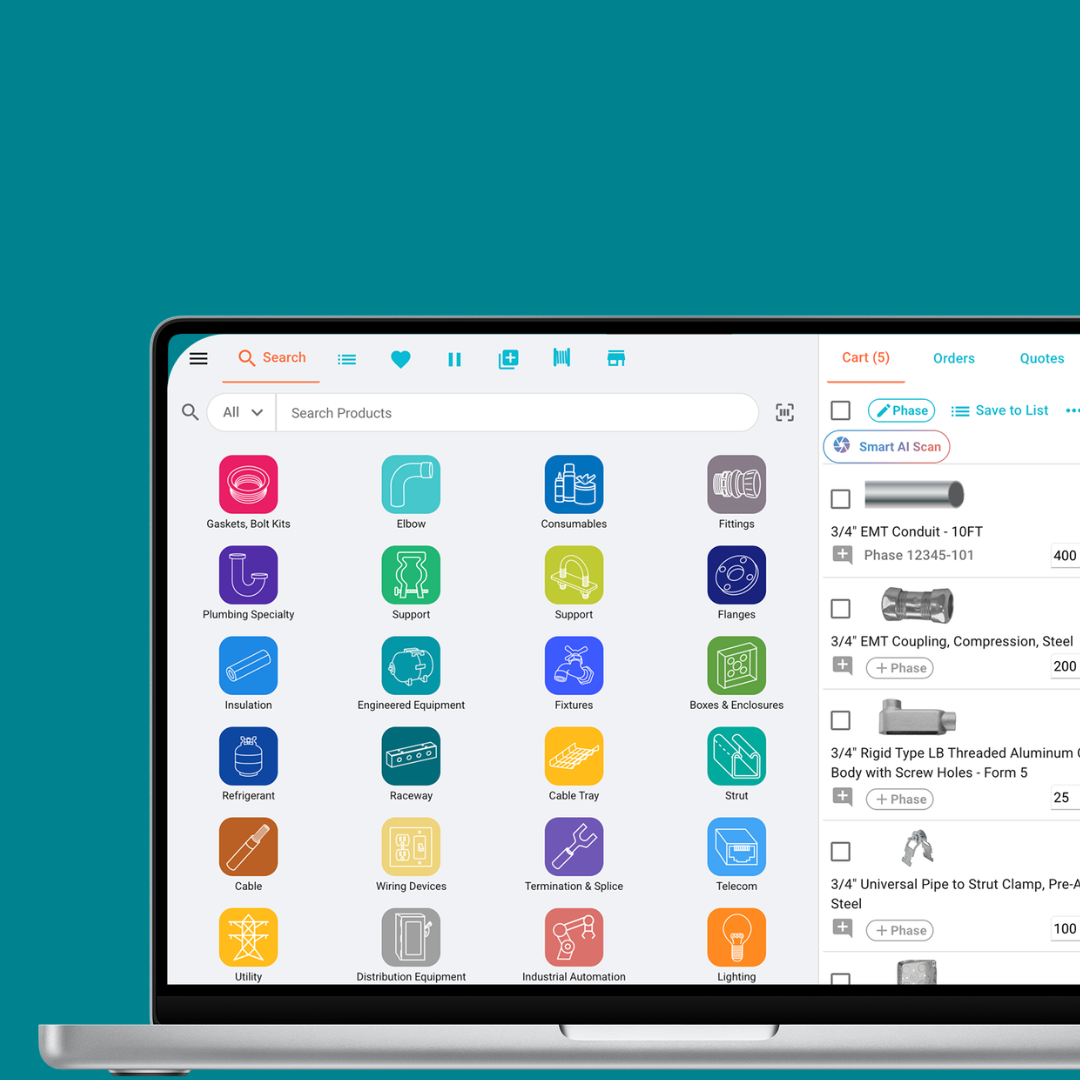
Visibility replaces status calls. Field teams see order status in real-time. Project managers see committed costs by job. The purchasing team stops being an information switchboard and acts as a strategic function.
Training becomes simple. "It's so much easier to train the next generation now," described a supervisor at Collins Electrical. "Instead of spending weeks teaching someone our old spreadsheet system, I can show them Remarcable's interface in an afternoon." When the system contains the process knowledge, new hires become productive faster and key person risk drops.
"Now I can just go onto the computer, do all the jobs at one time with a couple clicks, and then I am finished with all that," described a team member at Guarantee Electric. "Instead of making several different phone calls."
Recognizing the procurement breaking point before it breaks
The contractors who address procurement capacity proactively share a common realization: they were succeeding despite their systems, not because of them. The heroic efforts of the purchasing team masked infrastructure that couldn't scale.
Current processes obviously work, or the business wouldn't have grown. The question is whether they can support the next stage of growth without proportionally increasing headcount, burnout, or error rates.
"Remarcable makes us a better company," the team at Guarantee Electric concluded.
The breaking point is easier to recognize than to predict. But the patterns are consistent enough that contractors can evaluate their own operations honestly. Is the purchasing team a bottleneck? Is key person dependency a risk? Can the current infrastructure handle 50% more volume? The answers suggest whether the breaking point is approaching.
Electrical contractors evaluating their procurement capacity can request a demo to see how material management platforms handle scale.
Connected purchasing and material operations for MEP contractors
See how contractors run procurement with Remarcable
Request a demo and we'll walk through exactly how it fits your team's workflow.
.png)