The invoice you approved three weeks ago
Here's what 3-way match misses and how 4-way matching closes it.
Key Takeaways
- Invoice approvals fail because 3-way match anchors to the original PO, not the supplier's confirmed Sales Order.
- The supplier's Sales Order reflects the confirmed agreement. The PO reflects the original request. 3-way match uses the PO.
- 4-way match anchors to the Sales Order. Discrepancies surface before payment, not three weeks later as billing disputes.
You approved it. The math looked right, the line items matched the Purchase Order, everything was in order. Three weeks later, there's a billing dispute with the supplier, a project manager asking why a change order is still unresolved, and an AP manager who is getting blamed for the delay.
The approval wasn't wrong. The process worked exactly as designed, and that's the problem.
According to a 2025 ELECTRI International study of 34 electrical contractors, "payment delays and invoice approval processes" ranked as the top accounts receivable challenge, cited more frequently than any other theme across the entire dataset. This isn't a fringe issue inside a few disorganized shops. The industry's own practitioners identified it as their dominant AP pain.
And yet most electrical contractors keep trying to solve it the same way: faster approvals, more AP headcount, stricter supplier terms. Those responses address the symptom. The mechanism underneath it stays intact.
The structural problem in 3-way match
Three-way match is a standard AP control: an invoice gets approved only when it aligns with the Purchase Order and the proof of receipt. It's sound logic. The problem is that by the time an invoice arrives, the Purchase Order it's being matched against has already diverged from reality.
Here's what happens between the PO and the invoice. A supplier receives your Purchase Order and generates a Sales Order on their side. That Sales Order reflects what they actually have and confirmed: pricing adjustments based on current material costs, quantity substitutions when inventory was short, lead times that shifted between quote and fulfillment. The Sales Order is the supplier's confirmed version of the agreement. The PO is the original request.
When an invoice arrives referencing the Sales Order figures, your AP team is matching it against the original PO. One document reflects a confirmed agreement; the other reflects an intent. Those two documents diverge on nearly every project with varying complexity, and the variance is where the three-week delay lives.
The invoicing dispute isn't a sign that something went wrong; the three-way match process surfaced the gap exactly as it should. The problem is that the match was built on the wrong input.
Why it's not a people problem
The standard diagnosis puts the delay on the payer side: slow-moving GCs, intentional float, procurement bureaucracy. That diagnosis is partially true, and it's also a diagnosis your AP team can't act on.
The ELECTRI study found that internal documentation failures are a co-equal cause of invoice lag. Internal skills gaps and poor billing practices each scored among the highest-frequency factors when contractors identified why invoices get delayed inside their own organizations. Roughly half the delay originates before the invoice even reaches the GC's AP department.
Contractors can act on that half directly. The gap between what was ordered and what the supplier confirmed (the PO-to-Sales-Order delta) is a documentation problem, and it lives in your own procurement workflow.
The instinct to add AP headcount to close the gap is understandable. But adding people to a manual reconciliation loop speeds up the wrong activity. The reconciliation work is already happening: it's just happening off-system, in email threads and follow-up calls, after the discrepancy has already caused a rejection. More staff gets through the loop faster but it can’t close the loop.
The document that already has the answer
When a supplier confirms your order, they generate a document that reflects exactly what was agreed: the confirmed Sales Order. Unit prices as negotiated, quantities as available, delivery schedule as confirmed. That document exists before the invoice is ever cut.
The contractor's AP team has access to it. It's attached to an email somewhere, or it's in the distributor's portal, or it's in a folder on someone's desktop. The document exists. The invoice matching process just isn't built around it.
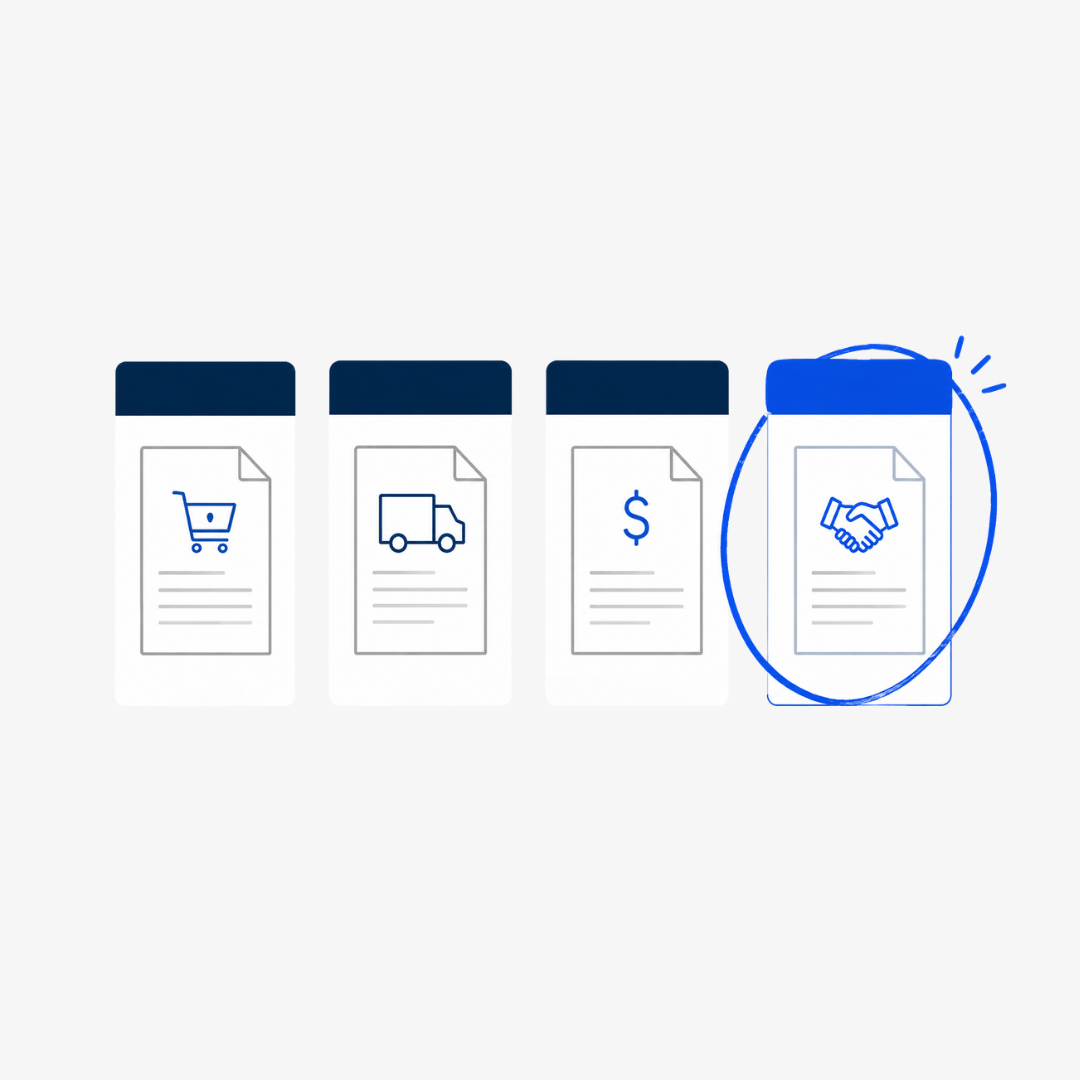
This is the gap that the 4-way match addresses. Where 3-way match compares the invoice against the original Purchase Order and a proof of receipt, 4-way match adds the confirmed Sales Order as the authoritative matching document. The invoice now reconciles against the document that reflects the actual confirmed agreement, not the original request.
The distinction has a concrete consequence for AP workflow. Consider two procurement systems: one that exports the original Purchase Request as the matching baseline, and one that exports the supplier's confirmed Sales Order. For an AP manager reconciling an invoice, those aren't equivalent. The first means matching against a document that may not reflect field changes, quantity adjustments, or price variances the supplier confirmed weeks ago. The second means matching against the record of what was actually agreed to.
Automated invoice matching built around the confirmed Sales Order eliminates the back-and-forth between AP and purchasing over what was actually ordered versus what the original PO said.
What discrepancy flagging catches before you pay
Guarantee Electrical processes $200M in material purchases annually. Before automated invoice matching, their team was spot-checking invoices manually, a review that, as they put it, "wasn't a good check and balance" at that volume. The shift to automated matching changed that: "Now we don't have to do that. That is all done automatically through Remarcable. And if someone committed a price to us, they're held at that price, and if we don't receive that price, we're alerted to it."
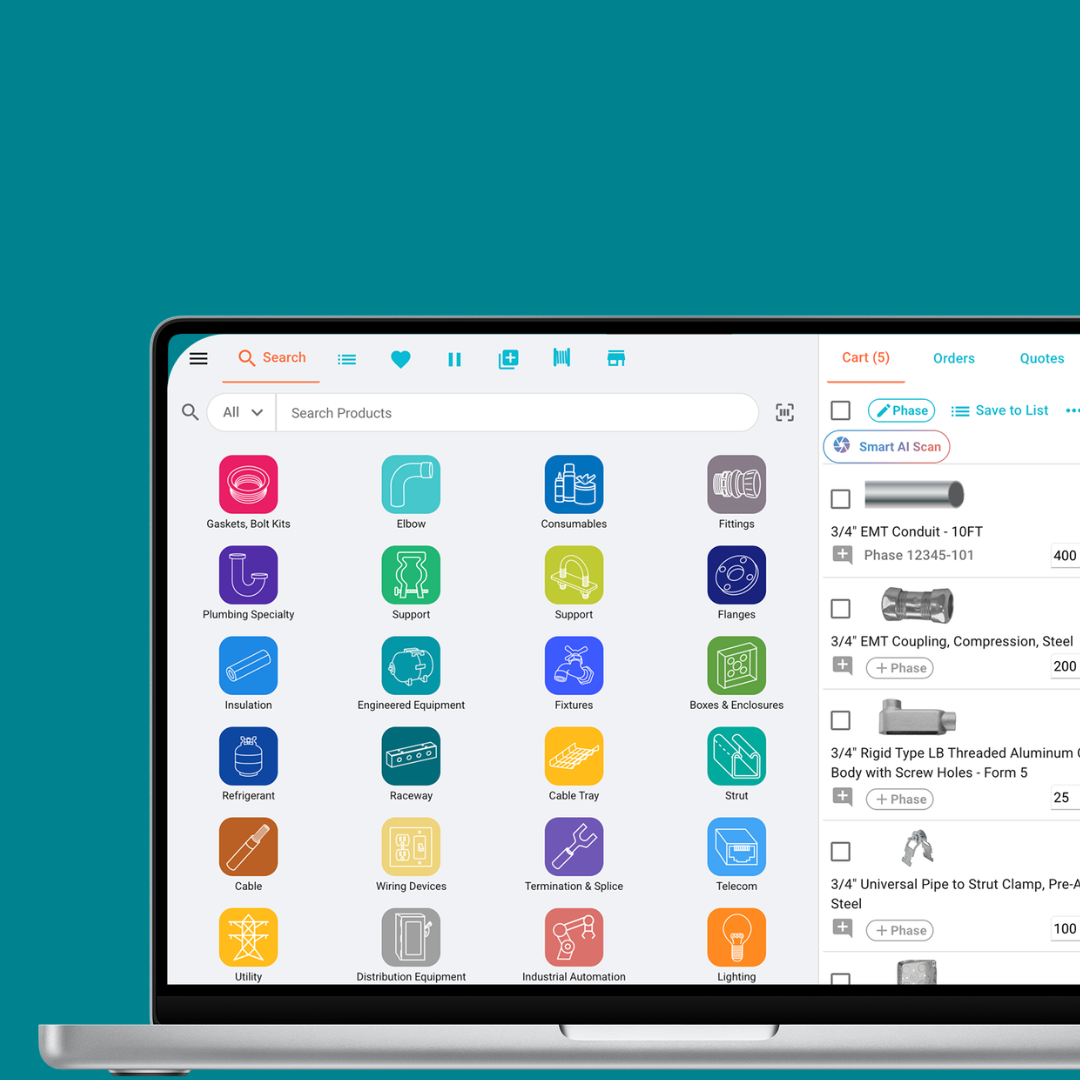
That's the operational difference. Remarcable Intelligence flags discrepancies before payment: price variances between what the supplier confirmed and what they invoiced, quantity mismatches, line items that don't reconcile to the Sales Order. The alert happens before the invoice is approved, not three weeks later.
The argument against adding another layer to AP workflow is reasonable. Four-way match sounds like one more approval gate, but the manual reconciliation work it replaces is already in the workflow; it's just happening reactively, in response to disputes and rejections that could have been caught upstream. Moving that check upstream, before payment, converts the manual reconciliation step into an automated one that runs before an approval ever goes out.
Why supplier discipline isn't the answer for mid-market contractors
Some contractors try to solve this by requiring suppliers to invoice exactly against the original Purchase Order. If the supplier invoices to the PO, the invoice will match, and the 3-way match problem disappears.
Large general contractors with significant purchase volume can sometimes enforce this. Mid-market electrical contractors typically cannot. Preferred supplier relationships in the $50M–$200M revenue range are built on volume and mutual flexibility, not contract enforcement. A supplier who makes a legitimate substitution when your spec'd product was backordered, or adjusts pricing to reflect a material index change that occurred between quote and fulfillment, is not an adversary to be corrected. They're a partner who confirmed a different agreement than the original PO reflected.
The realistic fix is matching against the document that already reflects the confirmed agreement: the Sales Order the supplier generated when the deal was done.
Consistent invoicing is the strategy that works
The same ELECTRI study asked 27 industry experts to rate AR improvement strategies by effectiveness. "Maintain timely and consistent invoicing to prime contractor or owner" scored 94.63 out of 100, rated Highly Effective, the top-ranked strategy in the analysis.
Consistent, accurate invoicing is the fix the industry's own experts endorse. The reason most contractors can't execute it consistently isn't that their AP teams lack discipline. The reason is that the supporting infrastructure for consistent invoicing doesn't exist: the reconciliation between what was ordered, what was confirmed, and what was invoiced is a manual, exception-driven process. Every variance has to surface as a dispute before it gets resolved.
Invoice matching in Remarcable processes against the confirmed Sales Order, not the original PO. It catches the variance before payment. The ELECTRI study on construction cash flow and payment terms, alongside the ELECTRI International research on electrical contractor material management covered on the Remarcable blog, reinforces the same conclusion: the documentation gap is addressable, and the tools to close it, exist.
Across Remarcable customers, automated invoice matching has produced 1–3% material cost savings by catching discrepancies that were already present in the invoices, before payment went out.
The invoice you approved was fine. The system it ran through wasn't.
The scenario at the beginning of this piece happens because 3-way match, correctly executed against a stale PO, produces approvals that still generate disputes. The AP manager didn't make an error. The process worked; the data it ran on was wrong.
The fix is structural. When the matching document is the confirmed Sales Order (the document that already reflects what was agreed), the discrepancy gets flagged before the invoice is approved. The three-week delay becomes a same-day alert. The manual reconciliation loop that currently runs through email threads and follow-up calls runs automatically, before payment, in the background.
If your AP team is still reconciling against original POs, book a demo — we'll show you what invoice matching against confirmed Sales Orders looks like in practice.
Connected purchasing and material operations for MEP contractors
See how contractors run procurement with Remarcable
Request a demo and we'll walk through exactly how it fits your team's workflow.
.png)