The first 90 days as a new construction procurement leader
A 90-day procurement plan for contractors

A new procurement leader at an electrical or mechanical contractor inherits an operation that is mostly invisible. The real material decisions happen out in the field rather than on the purchase order, and the money leaks in places that no report shows. The instinct is to walk in and start cutting costs, but that is worth resisting for a few weeks, because you cannot manage what you cannot see. The first 90 days are better spent understanding the operation and making it visible, since everything after that, savings included, depends on it.
The 30-60-90 day plan, the one with SMART goals and a fill-in template, was written for a marketing hire or a regional sales manager. It assumes you are walking into a documented business where the job is to learn the rules and set targets against them. That is not the situation at a trade contractor. The rules mostly live in people's heads, and the first job is finding out what they are.
What a new purchasing manager inherits
Most contractor purchasing departments grew one workaround at a time. A spreadsheet here, a supplier portal there, a long-tenured purchaser who knows which distributor actually has the gear in stock. It works until volume outpaces it, which is the point where a company decides it needs a real procurement leader. If that describes the seat you just took, you are inheriting a purchasing department that has outgrown its systems, rather than one that was built incorrectly. The mandate that comes with the seat is to let the company keep scaling without the purchasing chaos scaling with it.
The trouble is that the system you inherited records very little. Pricing lives in inboxes, order status lives in a purchaser's memory, and reconciliation happens by spot check, if it happens at all. Spreadsheets carry a surprising amount of the load, and 88% of spreadsheets contain errors, which means the numbers you are about to make decisions from are wrong in ways nobody has caught. Only 26% of contractors rate their own data quality as high. The team at Guarantee Electrical described the old method plainly: "Traditionally, we would export out of our estimating system into an Excel spreadsheet and then email that out to our suppliers." That is a habit, not an auditable process, and reconstructing it is the work.
Materials are 30-40% of total project cost, so a third of the budget runs through the function you can barely see. Act on the wrong read and you move real money in the wrong direction.
A 90-day procurement plan for contractors
The arc below is not a template to fill in. It is a sequence that fits how a contractor actually runs, where diagnosis and action overlap because the field will not wait for you to finish observing.
Weeks 1-2: See how materials get ordered
Material orders at a contractor do not begin in the purchasing office. They begin at the job site, when a foreman realizes the crew is short on conduit, and they arrive at purchasing in whatever format the field had handy (a phone call, a text, a photo, an email, a number scrawled on a delivery ticket). Paul Iorio, who runs procurement services at O'Connell Electric, knows the version that works: requests "come right to us, we know exactly what they want. It's not written on a back of a napkin or on a cardboard box. It's not taken on a screenshot from a telephone." Most new leaders inherit the napkin version.
Spend the first two weeks following the request, not reading reports about it. Pick one job, sit with the foreman, and watch how a need becomes an order. You will see where material requests get lost between the field and the supplier: the part described by sight rather than SKU, the purchaser translating "the gray fitting" into a catalog number, the back-and-forth that a senior purchasing agent at Morrow Meadows called "playing telephone." Workers lose 5.5 hours a week just searching for product data, and that hunt is where accuracy goes to die.
While you are out there, pull the data you do have. Export the last quarter of purchase orders. Sort by supplier, by job, by part, by who placed them. The patterns surface fast once it is sorted: the same part bought from three suppliers at three different prices, the one job that expedites everything, the long-tenured supplier nobody has renegotiated with in years. None of that shows up in a monthly report, and all of it is leaking margin. The goal is not to find a culprit but to build the first honest picture of how the department actually behaves, which nobody currently has.
Weeks 3-4: Fix one problem you can measure
The pressure to deliver something is real, and worth respecting. In his work on leadership transitions, Michael Watkins notes that as many as 40% of new leaders are judged to have failed within 18 months, and one of the surest ways to get there is to stay in observation mode while everyone waits. His advice in The First 90 Days is to find an early win that is big enough to matter and small enough to finish. The mistake is choosing a cosmetic one. Squeezing a supplier on price in week three signals that you reached for the obvious lever before you understood the machine.
A better early win comes straight out of what weeks 1 and 2 showed you. Stop one leak you can measure. Most contractor purchasing operations have at least one running quietly: the same material ordered twice because no one checked what was already on the shelf, the expedite freight that has become a habit, the invoices that get spot-checked instead of verified. Guarantee Electrical lived the last one: "With the amount of material we buy, we can only spot check a very small percentage. So it wasn't a good reflection, it wasn't a good check and balance."
Pick the leak with the clearest before-and-after, close it, and document the number. When two leaks compete for attention, take the one the team already complains about. Fixing a problem they have been raising proves you listened, and it turns the people who know the department's weak spots into allies for the work ahead. Those saved dollars matter less for their size than for what they prove: you found a real problem and fixed the system that allowed it, which earns the credibility to take on the bigger work next.
Frame the fix as a systems change rather than a personnel one. The duplicate order was not a purchaser's error. The process had no way to check on-hand stock before buying, so duplicates were always going to happen. That framing keeps the team on your side for the harder phase.
Weeks 5-8: Connect field, purchasing, and accounting
By now the core problem is clear: field, purchasing, warehouse, and accounting each operate from their own version of the truth, and the gaps between them are where orders, hours, and margin disappear. The average procurement cycle runs 40.5 days, and most of that is waiting, re-keying, and reconciling across systems that do not talk.
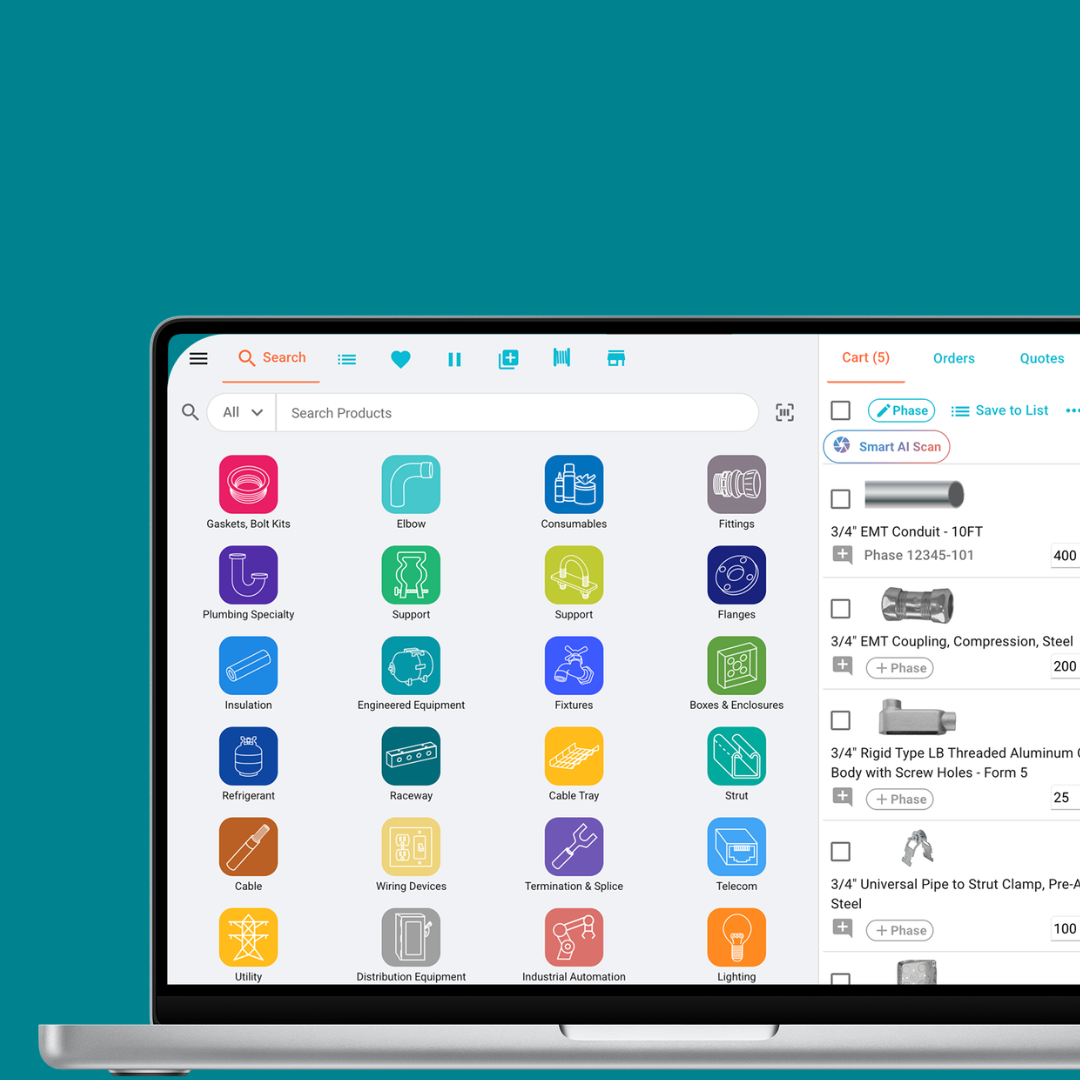
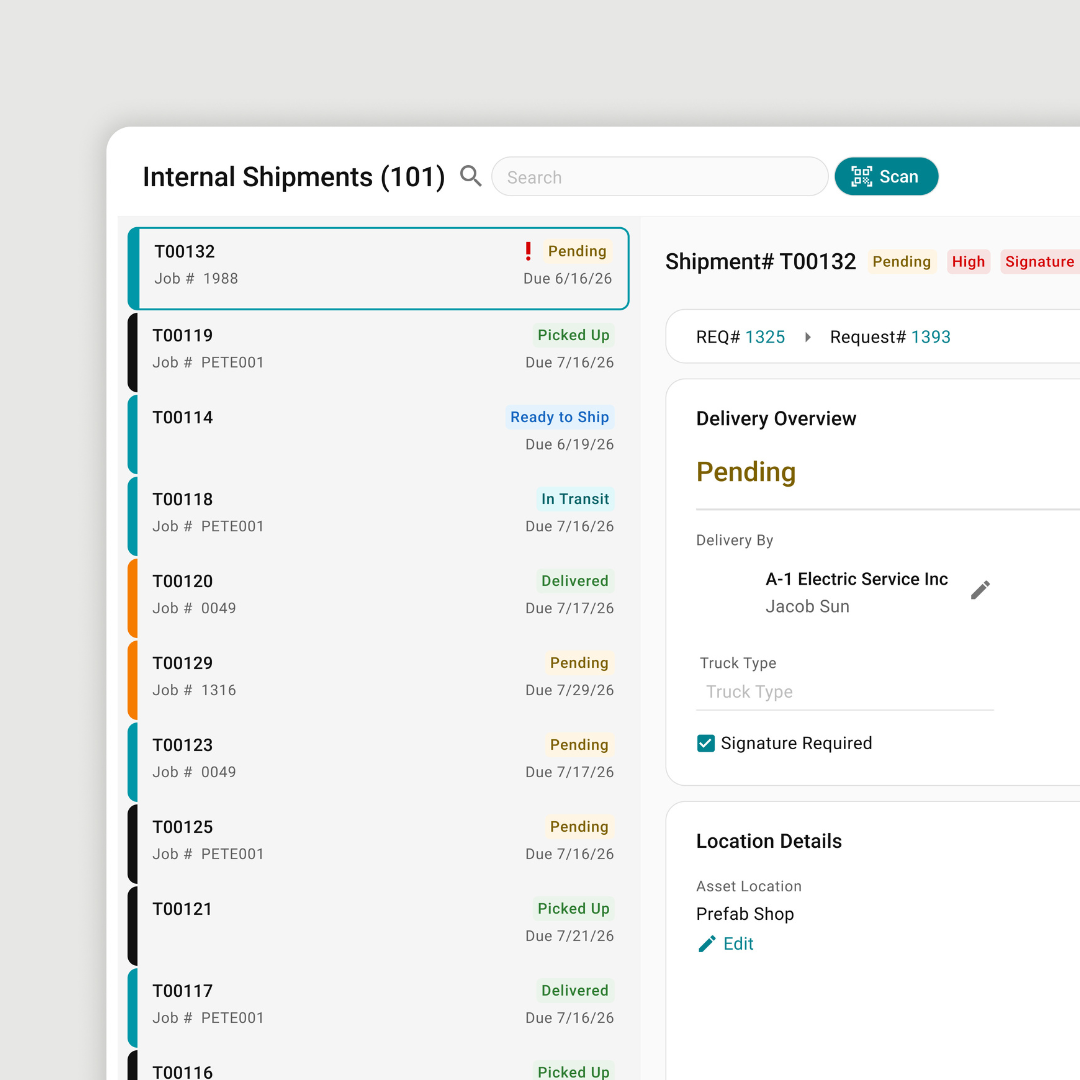
This is the phase where tooling belongs, once diagnosis is done. When a request leaves the field, four groups need the same information at the same moment: the purchaser who places the order, the warehouse that may already have the part, the supplier who fills it, and accounting that pays for it. When those four work from separate systems, someone spends the day moving information between them by hand. A system built for contractors, like Remarcable, exists to carry that information in one place so it passes through instead of getting retyped. The result is what Collins Electrical saw when it cut material management time from hours to minutes, moving a procurement cycle from 2-3 hours down to 10.
Integration claims are worth scrutinizing here, because they vary widely. Plenty of tools that say they integrate are really moving data through file exports, which leaves someone re-keying it anyway. Ask each vendor what happens to a part number, a price, and a job code as they move from field to supplier to your accounting system. The answer tells you whether information moves through intact or gets rebuilt by hand at every step.
Weeks 9-12: Measure what changed
Leadership hired a procurement leader to get a result, and the last phase is showing it in the terms they asked for. Go back to the baseline you built in week two and measure against it. Order accuracy, cycle time, expedite spend, duplicate orders caught before they shipped, invoices verified rather than spot-checked. Pick the few metrics that map to what the business cares about and report them straight.
Tie the result to schedule, because that is the language that lands with operations. Project timelines are compressing, and a material that shows up late no longer just costs an expedite fee, it costs days on a schedule that has no slack. A purchasing department that can see itself can promise dates and keep them. That reliability, more than any single cost saving, is what makes the case for the next investment and confirms the decision to bring you in.
By the end of the 90 days you will have made the operation visible, stopped a provable leak, connected the pieces that were drifting apart, and shown a number that moved. That is the foundation every harder project builds on.
Start with what you can see
A purchasing department you can see is one you can actually improve, and the savings follow once the leaks stop hiding. Walk the job site in week one, and see how a connected material operation runs before you decide what to change.
Connected purchasing and material operations for MEP contractors
See how contractors run procurement with Remarcable
Request a demo and we'll walk through exactly how it fits your team's workflow.