
Introducing Delivery Management
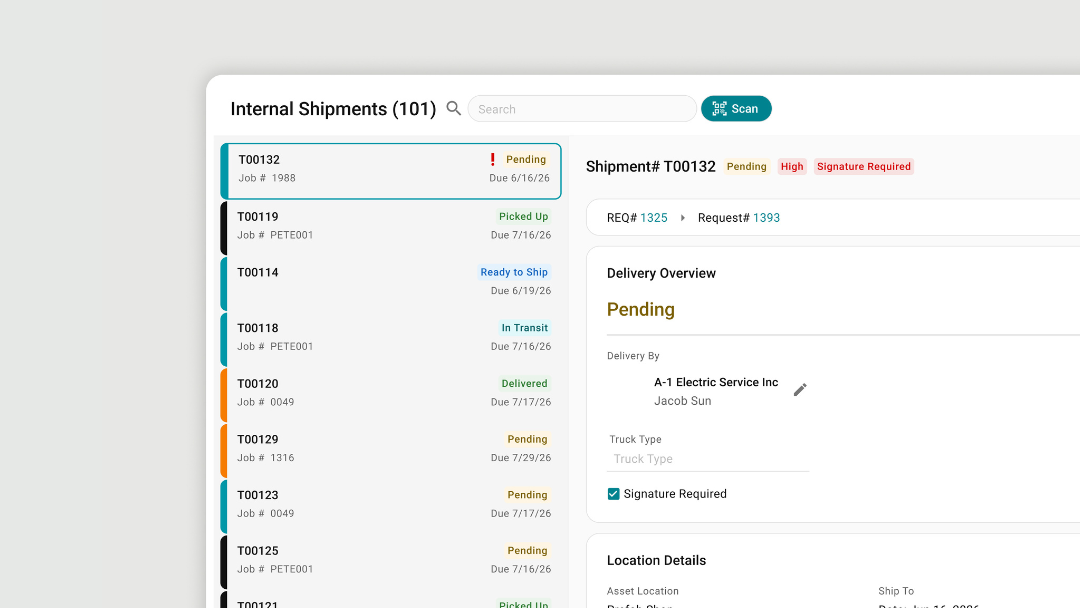
Track material, assemblies, and tools from your warehouse, shop, or tool crib to the moment a hand on site signs for it, with photos.

Key Takeaways
- The costliest problem on a job is a crew waiting on material, and manual material handoffs are a key part of the problem
- Delivery Management lives inside Remarcable, so the shop, the warehouse, and the field work from one record instead of separate apps and phone calls.
- The request is built from the item and the shipment from the request, then every load carries live status and photo proof of who pulled it, drove it, and signed for it.
Know where it is, and who signed for it
Follow a single request from the field, and you can probably predict where the handoff breaks. It starts when a crew asks the warehouse, the shop, or the tool crib for what they need. Was the request vague or incomplete, so someone had to call to sort out what "kits" meant? Was it really one request, or two? One request tells the shop to send the assembly, another asks the warehouse for the material and tools to install it.
Then it has to ship. Is that one truck, or two, or three? Where does each delivery go, and in what order? And when a truck pulls up to the site, who actually receives it, and where do they set it down? Most of the time the answer to any of these is a phone call, a text, or a shrug.
Each of those questions is a place the handoff can fall apart. Material leaves with no record and gets dropped off with no signature. Nobody can prove who took receipt of it, whether it arrived on time, or where it is now. Either way the result is the same: a crew standing around waiting, burning hours. A study out of UNM and Texas A&M put a number on the whole picture. About a third of a field team's productivity is lost to material mismanagement, to waiting, hunting, and rework.
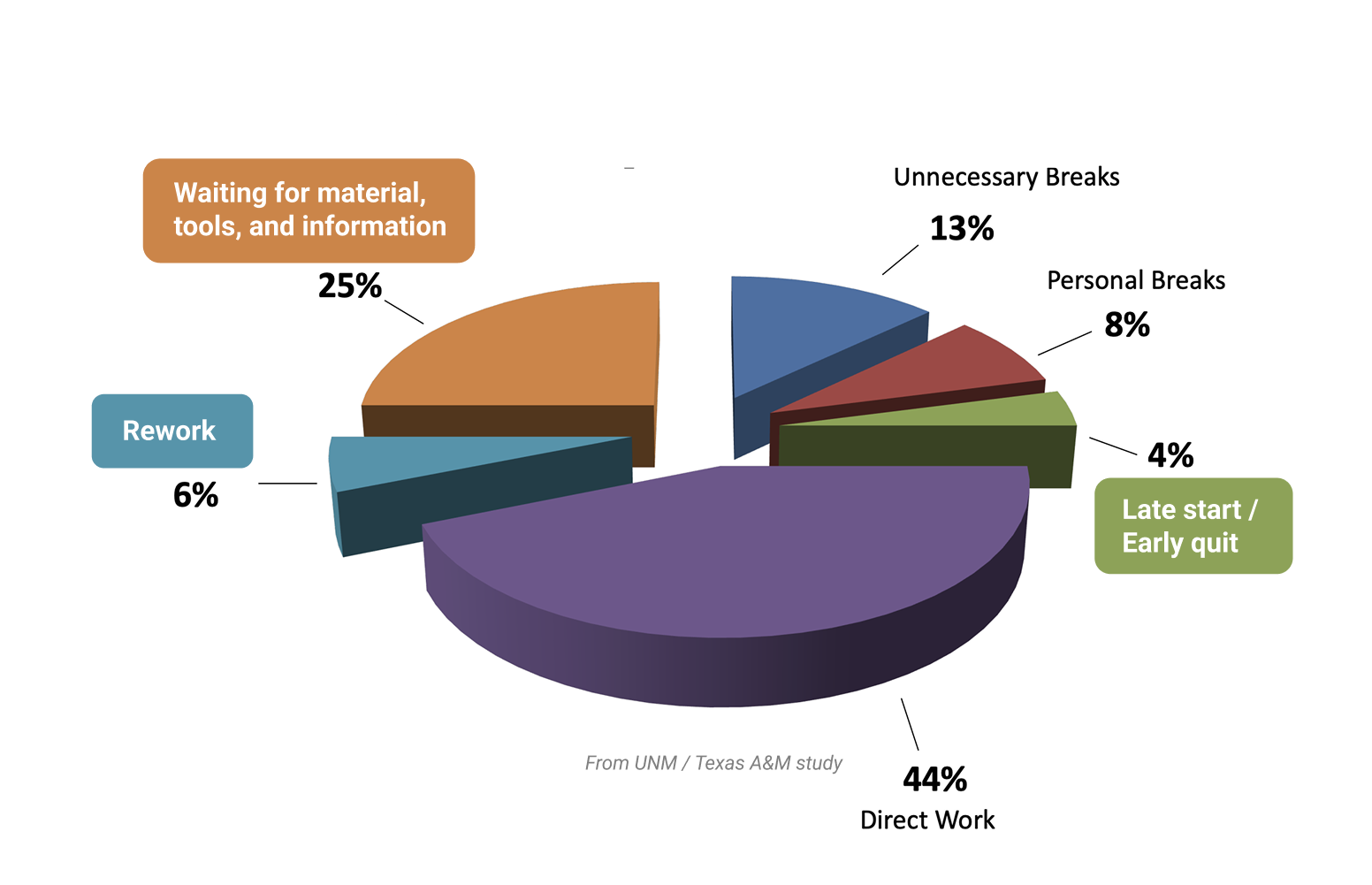
This isn't a hunch. When we partnered with contractors to map their supply chain, we kept finding the same bottleneck: the warehouse, the prefab shop, the drivers, and the field crews each working from their own information, with no single view of where material was or where it needed to go next.
Remarcable Delivery Management closes that gap. Track material, assemblies, and tools from the moment they leave your warehouse, shop, or yard to the moment a hand on site signs for them. You see where they are and who received them, with picture proof.
Built into the request, not bolted on beside it
Most delivery tools are a separate app with a separate login, cut off from where you manage material and tools. Delivery Management lives inside Remarcable, so the shop, the warehouse, and the field all work from the same record.
The request is built from the item. The field requests the exact item or assembly straight from Remarcable. The detail already lives in the system, so the part, the quantity, and the job come with the request instead of getting lost the way they do on a hand-entered order. No vague "I just need kits," no callback to figure out what someone meant.
The shipment is then built directly from the request, with the requestor, the job site, and the items already filled in. One request can go out as a single shipment or split across a few, and each one references the information you need to track where it is and who signed for it.
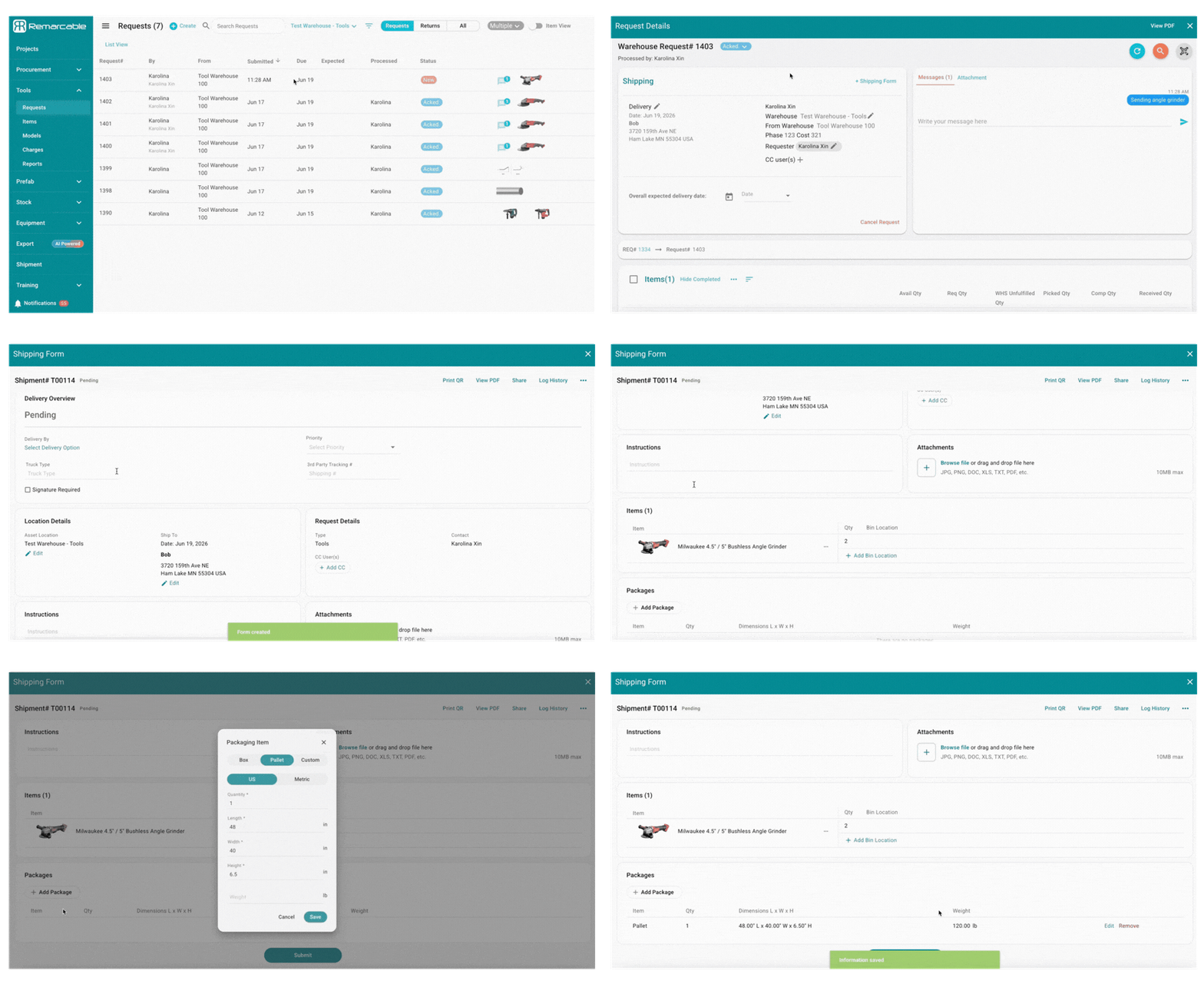
Remarcable also works natively with Brady printers, so you can print labels in the shop and the field, ready to scan for the next step in the process.
Status you can actually see. Every shipment shows as Pending, In Transit, or Delivered on a live dashboard, color coded by driver. Print QR codes The field knows what's coming, with whom, and when. No more calling the shop to ask where the truck is.
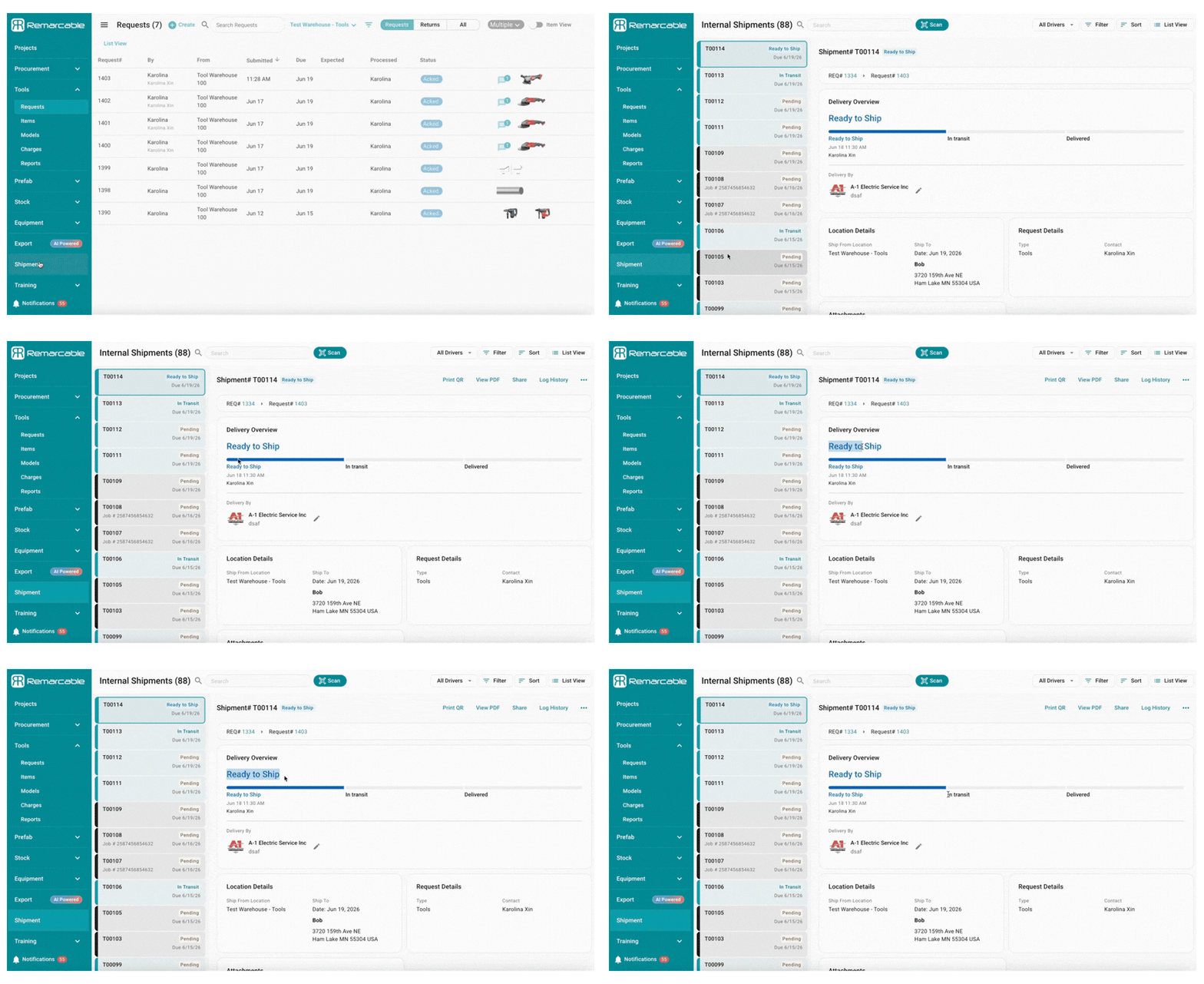
Received in one tap. Scan the QR code at the shop, the warehouse, or the job site. No more paper tickets that never make it back to the office. Each team member receives the order and moves it to the next status with a simple scan.
Proof, start to finish. See who pulled it, who drove it, and who signed for it, with photos captured along the way. A full record lives on the shipment, so "I never got it" finally has an answer.
The bigger the job, the more this matters
On complex projects, the handoff compounds. Material rarely runs straight from the shop to the crew. On a data center or a stadium, it moves from the yard to a laydown yard to a staging area before a trade ever installs it, point A to point B to point C, and every stop is a chance to lose the thread.
One connected view changes how those jobs run:
- Fewer trucks. Instead of separate runs for tools, prefab, and inventory across the day, teams can combine loads into a single trip.
- Clear driver instructions. Drivers see exactly what's on the truck and where each drop goes, so there's no guesswork at the site.
- A field that can adapt. Crews track what's inbound and re-route material fast when conditions on site change.
Bridging the shop and the field this way cuts the redundant trips and gives crews the visibility to stay ahead of the work instead of reacting to it.
What it looks like when it works: Taft Electric
Taft Electric runs tool and material requests across more than 300 active projects. For years they managed it the way most contractors do, with a separate point solution, but requests arrived by email and phone calls, and photos were scattered across phones and folders. Incomplete requests from the field meant constant follow-up, with only 30% of requests submitted completely the first time. They didn't have a people problem; they had a systems problem.
Then they moved the whole thing onto Remarcable Delivery Management.
Now the field picks exact items from a digital inventory, with photos and spec sheets, so the guessing stops. Every order pre-fills the requestor, the site, and the items. Every shipment carries photos and a signature. The results Taft has seen:
- From 30% to more than 80% first-time accuracy on field requests, a 160% jump.
- A 10x faster delivery request process, from about five minutes down to 30 seconds.
- About 104 staff hours saved a year in reduced work and rework, roughly two hours a week back for their tool crib manager alone.
"Before Remarcable, maybe 30% of orders were right the first time. Now we're at 80% to 90%," says Adam Rojas, Tool Crib Manager at Taft Electric. "The field picks exactly what's in our inventory, so there's no one guessing and nobody assuming."
His favorite part is simpler than the numbers. "There is a picture of someone in the field holding it," he says. "That feels so good."
Where it fits
Delivery Management works anywhere material moves from a place you control to the field: a prefabrication shop sending assemblies to the site, a tool crib filling a field request, a warehouse shipping a pallet of material. If your shop, your warehouse, and your field are running on different systems and different phone calls, this connects them.
If you already run Remarcable, reach out to your success manager for a full demo. If you're new to Remarcable, contact sales and we'll show you what connected procurement and material operations look like.
Every part. Every team. Every order. Finally connected.
Connected purchasing and material operations for MEP contractors
See how contractors run procurement with Remarcable
Request a demo and we'll walk through exactly how it fits your team's workflow.

.png)