Why Contractors Keep Buying Materials They Already Bought
Duplicate material orders cost electrical contractors thousands of dollars per job.


Walking into the warehouse and seeing three pallets of the same conduit connectors for a single job is an indication of how disconnected your material management system has become. The first arrived two weeks ago and wasn’t properly inventoried. The second one arrived because a foreman called the supplier directly when they couldn’t find the first shipment and assumed it didn't show up. The third came in yesterday because nobody knew the other two existed and didn’t want to risk not having materials in time.
Electrical contractors don't talk about this problem at industry events. Nobody brags about the $8,000 sitting in duplicate wire pulls or the matching sets of breaker panels ordered for the same job because they didn’t get inventoried properly. The problem is common enough that most purchasing managers recognize it immediately. Materials get ordered, arrive, disappear into warehouses or trucks or job sites, and then get ordered again because nobody knows what exists where.
This isn't about incompetent people making careless mistakes; it’s not a people problem. It’s a systems problem. It's what happens when material visibility doesn't exist across the locations, systems, and people involved in getting supplies from distributors to installation. The result is not only over-ordering, this impacts warehouse space allocation, aging and lost inventory, and negative impacts on the ever precious cash flow.
Why Duplicate Orders Actually Happen
According to research from the Associated General Contractors of America, 41% of construction firms accelerated material purchases after winning contracts to avoid delays in 2025. That strategic stockpiling to hedge against supply chain uncertainty creates another duplication vector. When multiple project managers are buying ahead for their jobs and nobody has visibility into what's already been ordered or stored, overlap becomes common.
Jessica Nascusa, Senior Purchasing Agent at Morrow Meadows, describes the communication breakdown: "It's kind of like playing telephone. There's a translation issue of needing a certain part and if you don't have the exact model numbers, it's sometimes hard to remember everything to give to the vendor, and the vendor assumes it is a different part." The lack of clarity and specificity leads to a translation gap and so field teams order materials multiple times with slightly different descriptions, not realizing they're requesting the same components. The result is bloated inventory levels costing the firm money.
The Hidden Costs Beyond the Purchase Price
Duplicate orders create direct financial loss, but the larger cost comes from what happens after the duplicate materials arrive. Extra inventory ties up working capital. Storage costs accumulate when warehouses fill with overstock. Aging materials that sit too long risk obsolescence as electrical codes change and suppliers discontinue product lines.
According to Commerce Bank's 2025 US Construction Industry Report, tariff-related material cost increases prompted electrical contractors to stockpile gear, with electrical equipment prices rising eight to ten percent in early 2025. When contractors are already managing strategic inventory buffers to protect against price volatility, adding accidental duplicate orders on top of intentional stockpiling puts even more pressure on cash flow, working capital, and storage capacity.
In addition, tracking and reconciling duplicate orders consumes administrative time, ultimately another cost. Paul Iorio, GM of Procurement Services at O'Connell Electric, points to the chaos of informal ordering: "It's written on the back of a napkin or on a cardboard box. It's taken from a screenshot from a telephone. It's through an email." When orders come through informal channels, reconciling what was ordered, what was received, and what was actually needed becomes significantly harder.
The associated costs come in the form of labor, materials, and storage and can impact both cash flow and working capital. In an era of tariffs, increased material costs, a tighter labor market and increased rents, the pressure on margins can be intense so finding ways to reduce costs and free up cash flow can have huge upside.
Why Visibility Gaps Create Systematic Over-ordering
When trying to uncover the reasons behind duplicate ordering, it’s easy to point the finger at the persons who placed the order, but in reality they are not the cause. The root cause behind most duplicate material orders isn't a failure of individual competence, it's the absence of proper processes and systems–real-time visibility into what's on-hand, where it is located, and what's on the way. When electrical contractors rely on disconnected systems, spreadsheets, email threads, and tribal knowledge to track materials, nobody has complete information at the moment they need to make ordering decisions.
Inventory exists in multiple locations simultaneously: the main warehouse, service trucks, job site storage containers, prefab shops. Without a system that tracks materials across all locations in real time, what's technically on-hand becomes invisible to the people making ordering decisions.
Christopher Seagrist, Prefab Coordinator at Morrow Meadows, describes the coordination challenge before centralized systems: "Challenges we’re having to coordinate with the field a little bit more as far as specifics and hunt down which vendor or warehouse I'm gonna be able to get certain materials from." When every order requires hunting down information from multiple sources, the lack of visibility and lack of clarity causes friction which can lead to people ordering defensively rather than easily finding what already exists.
The information lag problem gets worse when approval workflows slow down urgent requests. For example, a foreman submits a materials requisition on Tuesday morning for items needed Thursday. The project manager is on site all day and doesn't see the approval request until Tuesday evening. Purchasing doesn't receive the approved requisition until Wednesday morning, by which time the foreman panics and calls the supplier directly. The original requisition still gets processed, and duplicate materials ship.
Michael Sadler, Pre Construction Manager at B&D Industries, contrasts the old way with integrated visibility: "We can actually follow it from our request, or the foreman's request, all the way through to delivery and we know an exact day when that material is coming and we can plan out that way." Without that end-to-end visibility, multiple people often place orders for the same materials because nobody can confirm with certainty that the materials are already coming.
Job Site Urgency Versus Inventory Reality
Construction schedules create pressure that makes duplicate ordering more likely. When electricians are scheduled to arrive on site tomorrow morning and materials haven't shown up today, waiting to verify inventory status feels like gambling with crew productivity, adding to higher labor costs, and negatively impacting downstream work. The cost of six electricians standing idle for half a day exceeds the cost of ordering duplicates, so field supervisors default to ordering defensively, negatively impacting project margins.
That defensive ordering logic makes perfect sense from the perspective of an individual project manager trying to keep one job moving. But when every project manager operates with the same logic, the company ends up with systematic overordering across all projects.
According to Skanska's 2025 Summer Construction Market Trends, nearly 25% of contractors reported project delays or cancellations due to tariff-related price hikes in early 2025. When contractors have experienced material shortages on critical components like panels and switchgear, ordering extra becomes habitual even when supply chains stabilize.
Steven Druin, SVP of Technology at Interstates Electric, points to another problem: "They wanted to order something like a four square box into our purchasing department and that opens the door for 30 more questions. How many, what size knockouts do you need, what kind of connectors do you need in the box, do you need brackets, what type of brackets. This creates so much more communication than is necessary and slows down the process." When simple orders require extended back-and-forth communication, delays accumulate and people start bypassing the system to order directly. Those direct orders create duplicates because they never show up in the central purchasing record.
Integration Theater Versus Real-Time Data
Many electrical contractors have attempted to solve visibility problems by implementing software systems. But implementation alone doesn't guarantee real-time visibility if the systems don't actually integrate with one other. Druin calls out what he terms "integration theater": "A lot of companies say they integrate... when they truly don't, they're importing and exporting CSVs with minimal data flow at best. True integration is making API calls and pushing that data back and forth between automated systems."
When accounting systems don't sync with procurement systems, and procurement systems don't connect to inventory management, contractors end up with multiple versions of the truth. Nobody knows which version is current, so everyone defaults to ordering what they think they need based on incomplete information.
Deloitte's 2026 Engineering and Construction Outlook notes that tariffs raised effective rates to 25 to 30 percent, a 40-year high, forcing new risk management approaches in ordering. That environment pushes contractors to buy ahead when prices are favorable. But buying ahead only generates value if those materials get used instead of duplicated by later orders that ignore what's already in stock.
Guarantee Electric discovered that 40% of people's time was going to material management. When nearly half of worker time goes to managing materials instead of installing them, and when that management happens across disconnected systems without shared visibility, duplicate orders are a predictable outcome rather than an anomaly.
Visibility Reduces Cost
Real-time visibility across inventory, orders, and job requirements creates conditions where duplicate orders become exceptions rather than routine occurrences. When a foreman can check from the job site whether materials are available in the warehouse or already on order from a supplier, they don't need to guess and order defensively. When a purchasing agent can see that three project managers have requested similar materials and can consolidate those requests into one order, duplicates get caught before purchase orders go out.
Christopher Seagrist describes the difference: "Now Remarcable takes care of all that for me. I can go and I can order everything in a one-stop-shop kind of like online ordering." When visibility and ordering happen in one integrated workflow, the friction that drives people to work around systems disappears.
Steven Druin points to what integration made possible at Interstates: "We brought on approximately 230 job site supervisors and we had quick adoption from that team in the field that went from filling out a PDF form to using the order entry forms inside of Remarcable." When 230 supervisors can order directly through a system that maintains central visibility, purchasing capacity increases and costs decrease without adding staff because everyone can see what everyone else has ordered.
The Path Forward
Duplicate material orders represent a symptom of disconnected systems and inadequate visibility rather than careless purchasing decisions. Without real-time visibility into what's on hand, what's on order, and what's been allocated to specific jobs, duplicates become inevitable.
The solution isn't adding more approval steps or restricting who can order. Those approaches slow down operations and frustrate field teams without addressing the root cause. What actually reduces duplicates is giving everyone involved in procurement access to real-time, accurate information in systems that integrate ordering, inventory, and job costing.
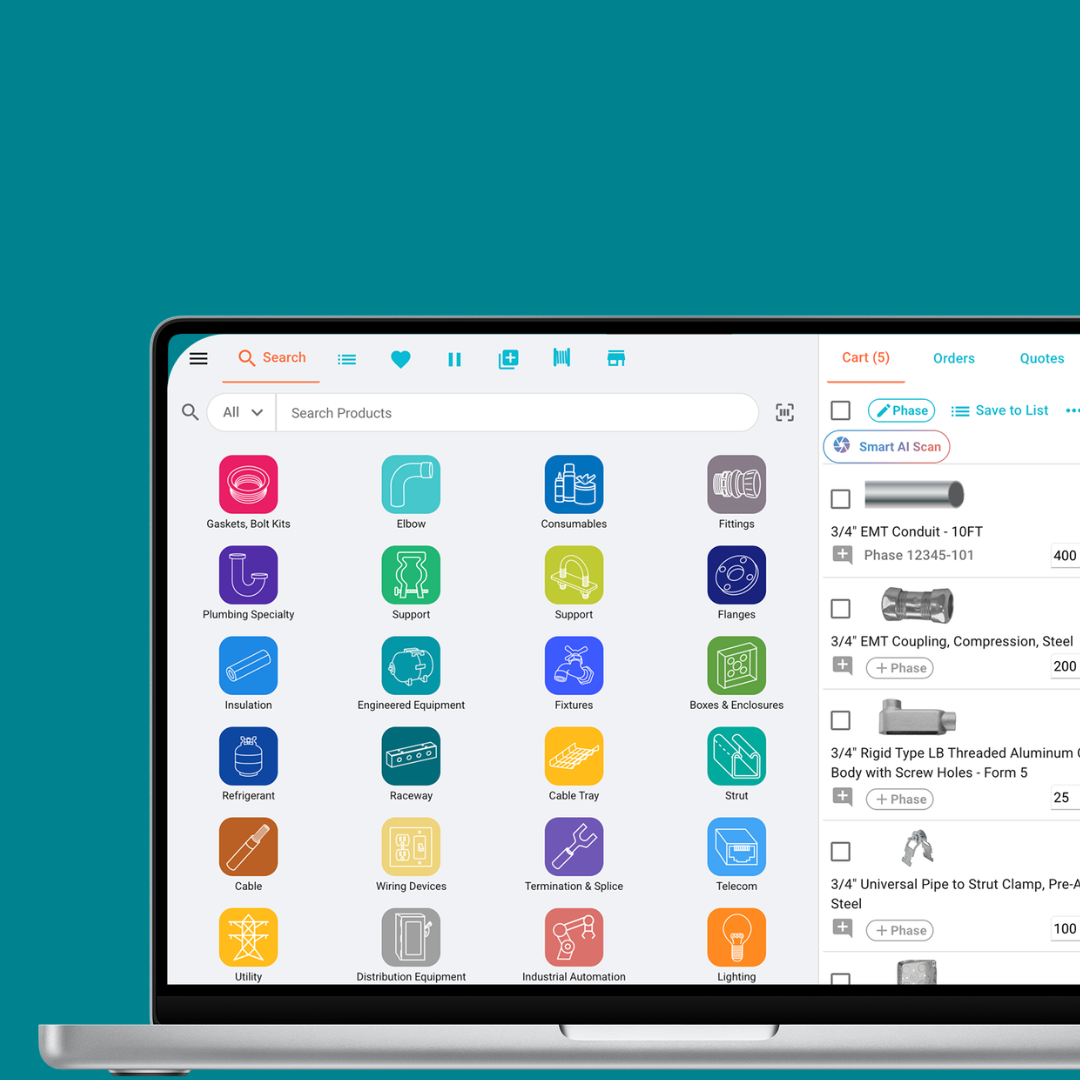
Remarcable provides electrical and mechanical contractors with real-time visibility across procurement, inventory, and field operations in one integrated platform. StockSense identifies existing inventory before duplicate orders go out. Field teams can requisition materials from job sites while purchasing maintains central visibility across all projects. Direct integration with 450+ suppliers and automated inventory updates mean ordering decisions happen with current information, not stale data from yesterday's spreadsheet.
Request a demo to see how real-time inventory visibility reduces duplicate material orders.
Connected purchasing and material operations for MEP contractors
See how contractors run procurement with Remarcable
Request a demo and we'll walk through exactly how it fits your team's workflow.
.png)