How to Track Purchase Orders Through to Delivery
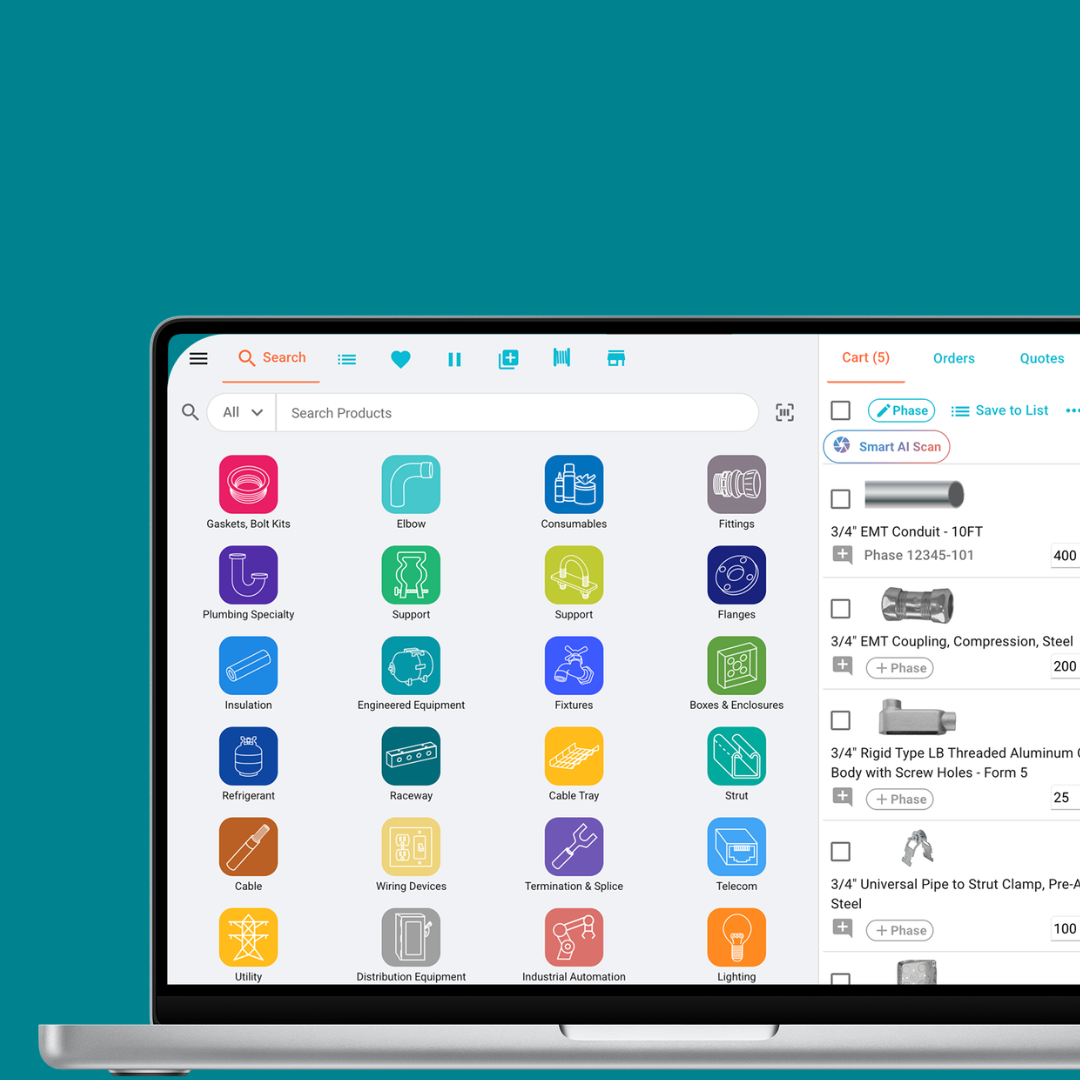
The journey from submitted PO to delivered material passes through four stages where visibility can fail.
Tracking a purchase order in construction means knowing where materials are from the moment the PO leaves your system and the moment they show up on the job site. That's the part most contractors have no visibility into, and it's the part that can break schedules.
The ordering itself usually works fine. Approvals route, POs get created, suppliers get notified. But once the order is out the door, the purchasing team is essentially blind. Did the supplier receive it? Is the material in stock? When does it ship? Is it going to the right site? The answers to those questions typically live in phone calls, emails, and the supplier's system, none of which are connected to the contractor's system. 98% of construction projects face delays, and material delivery issues are among the most common contributors. With project delivery timelines compressing 10 to 20%, there's less room to absorb a surprise, and a one-day material delay can cascade into a week of resequencing.
Where purchase order tracking breaks down
The journey from submitted PO to delivered material passes through four stages where visibility can fail. Each one creates a different kind of risk.
PO submitted but not acknowledged
The order leaves the contractor's system, but the supplier hasn't confirmed receipt. Emailed POs sit in inboxes. Orders sent through supplier portals may not get processed immediately. Without automated acknowledgment, days can pass before anyone realizes the supplier never received or processed the order. The purchasing team assumes the clock is running, but it may not be. Every day that passes is a day of crew scheduling built on a false assumption, with labor costs accumulating against a delivery that hasn't begun.
Order acknowledged but availability uncertain
The supplier confirms the order, but stock is a different question. The item may be on backorder. It may be partially available, with the balance shipping from a different warehouse on a different timeline. Roughly 40% of construction projects experience supply chain disruptions that affect material availability. The sooner a contractor knows about a stock problem, the more options exist for sourcing alternatives or adjusting the schedule.
Shipped but no delivery visibility
Some suppliers provide tracking numbers. Some provide estimated dates. Some provide nothing. For a contractor managing dozens of open POs across multiple job sites and a multitude of suppliers, knowing that something shipped without knowing when or where it will arrive is barely useful. A delivery that shows up at the wrong site creates its own coordination cascade while the crew that needed those materials sits idle.
Delivered but not verified against the PO
Materials arrive, but nobody confirms that what showed up matches what was ordered. Partial shipments go unrecognized. Wrong items sit on a job site until someone tries to install them. Price changes between the quote and the delivery slip through when there's no system comparing the receipt to the original PO. Without a receiving process tied back to the purchase order, discrepancies surface during invoice reconciliation weeks later, when the context is gone and the margin is already lost.
Why tracking purchase orders by phone doesn't scale
The default tracking system in construction is a person making phone calls. The project manager calls purchasing. Purchasing calls the supplier. The supplier checks their system and calls back, or doesn't. Each link in that chain adds hours and the possibility that information gets lost or distorted along the way.
That loop runs dozens of times per day at a busy contractor. Construction workers spend 35% of their time on non-productive activities, and "where is my order?" calls are a significant contributor. Every status inquiry takes 10 to 15 minutes when you account for hold times, voicemails, callbacks, and relaying the answer to whoever asked.
Email tracking is marginally better but creates a different problem. Supplier confirmations arrive in individual inboxes. Shipping notifications get buried in threads. Status updates scatter across email chains that nobody searches when the foreman calls about the expected delivery. The information exists somewhere, but it's distributed across people and systems in ways that make it functionally invisible. When the purchasing coordinator is out sick or on vacation, that institutional knowledge walks out the door. Nobody else knows which emails to search or which supplier contact to call for updates.
Spreadsheet-based tracking attempts to centralize the information, but the data is stale the moment someone stops updating it. A shared order tracker works until the tenth open PO, then falls behind and never catches up. The purchasing team ends up maintaining the spreadsheet alongside the actual tracking work, which doubles the work without solving the core problem.
The phone-and-email approach also leaves no audit trail. When a delivery dispute arises or an invoice doesn't match, the answer is locked in someone's memory or buried in a thread that may not exist anymore. That documentation gap is what turns a tracking problem into an accounting problem.
What purchase order tracking changes for contractors
When tracking works, the people who need to know see order status’ without asking anyone. The shift is from chasing information to having it show up automatically.
Michael Sadler, Pre Construction Manager at B&D Industries, described what this looks like in practice: "We can actually follow it from our request or the foreman's request all the way through to delivery and we know an exact day when that material is coming and we can plan out that way. We can forecast when the build is actually gonna be done."
That forecasting ability is the real value. When a project manager can see that Thursday's conduit delivery is confirmed and on schedule but the switchgear is backordered until next Tuesday, they can adjust the work plan before the crew shows up and finds out the hard way. The adjustment happens on a screen, not through a chain of phone calls. With 92% of construction firms reporting difficulty finding workers, idle crew time from material delays carries a higher cost than ever. A four-person crew waiting half a day for a delivery that should have been on site represents billable hours the business never recovers.
Receiving confirmations close the loop. When materials arrive at the job site, field teams verify what showed up against the original PO. Short shipments and wrong items get flagged on the spot rather than discovered weeks later during invoice reconciliation, when the context is gone and nobody remembers what actually arrived at which site.
That receiving data feeds directly into invoice matching, so the accounting team can verify that what was ordered, what arrived, and what the supplier billed all agree before cutting a check. At industry margins of 5 to 6%, catching discrepancies before payment instead of after job closeout is the difference between protecting margin and absorbing the loss. The three-way match between PO, receipt, and invoice is a standard practice in construction accounting. What's often missing is the system that makes it automatic rather than a manual exercise across three different data sources.
Paynecrest Electric described the real-time communication that makes this work: "If you order something from the warehouse, they will send you a message right away saying, we've got your order, or, 'Hey, we don't have this right now. Should we purchase it right now? Or can you wait a couple days?' And that message comes back instantaneously."
Tracking challenges specific to construction purchasing
General procurement tracking handles standard items with predictable delivery patterns. Construction adds complications that most purchasing systems aren’t designed for.
Partial shipments. Suppliers ship what they have and backorder the rest. A single PO can generate multiple deliveries arriving on different days to different locations. Tracking for construction materials needs to follow each line item independently, not just the PO as a whole. Otherwise a PO shows as "partially received" with no clarity about which specific items arrived and which are still outstanding. The backordered items may not come with firm dates, and those estimates shift as supplier inventory fluctuates.
Multi-site delivery coordination. A contractor running 20 active jobs has materials from multiple POs shipping to multiple different locations simultaneously. What matters to a project manager isn't whether individual POs are on track, it's whether everything needed for Thursday's rough-in at Job Site C will be there by Wednesday afternoon. A job-level view of all incoming materials across all POs is what project managers actually need, and it's the view that most tracking systems don't provide. Standard PO tracking shows order status. Construction PO tracking needs to show job readiness.
Held and will-call orders. Not everything ships on a standard schedule. Some materials are ordered early and held at the supplier until the job site is ready. Without visibility into what's staged and waiting, held orders become forgotten orders sitting at supplier warehouses, tying up working capital in materials that nobody remembers ordering.
Long-lead specialty items. Custom switchgear assemblies, specialty transformers, and engineered equipment come from suppliers with less automated ordering systems and longer production timelines. With copper wire and cable prices up 13.8% year over year and materials cost volatility increasing, the materials with the highest schedule and financial impact are the hardest to track. They're also the ones where early warning of a delay or price change matters most.
These challenges compound on one another. A partially shipped order to the wrong site with no tracking visibility on the backordered items isn't an edge case — that's a regular Tuesday at a busy contractor. And each one generates its own cascade of phone calls, schedule adjustments, and invoice discrepancies downstream.
The black hole between order and delivery exists because the systems involved don't talk to one another. Closing this gap isn't about working harder at coordination or hiring someone to manage a spreadsheet. It's about connecting the procurement system to supplier systems so that order acknowledgments, shipping statuses, and delivery confirmations move automatically. The people who need the information see it without asking. Exceptions surface before they become emergencies. And every receipt ties back to its original PO so accounting can match invoices against what was actually ordered and delivered.
Connected purchasing and material operations for MEP contractors
See how contractors run procurement with Remarcable
Request a demo and we'll walk through exactly how it fits your team's workflow.
.png)